
Study shows singing reduces symptoms of postnatal depression
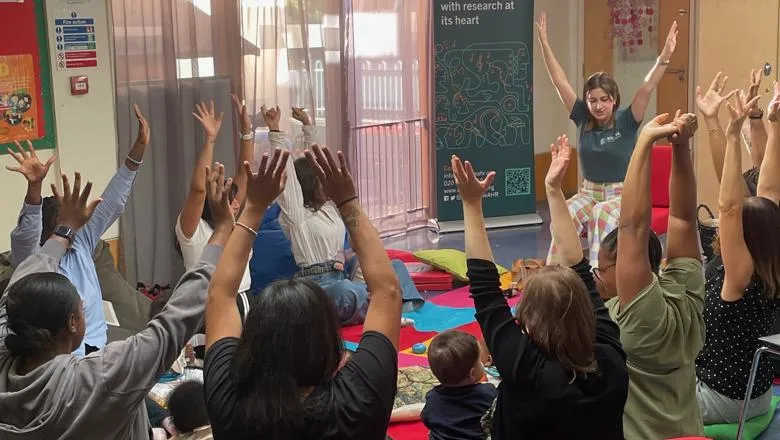
A study by the Institute of Psychiatry, Psychology & Neuroscience (IoPPN) at King’s College London and the social enterprise Breathe Arts Health Research has shown that group singing is an effective way to treat mothers with postnatal depression.
The study, published in the British Journal of Psychiatry, is the first to evaluate both the clinical and cost effectiveness of group singing sessions for mothers experiencing postnatal depression. It is part of the SHAPER programme which is assessing the effectiveness and implementation of arts-in-health interventions.
The SHAPER-PND project, reported here, explores the impact of community-based group singing on maternal mental health, providing an accessible intervention that helps new mothers overcome the personal and societal barriers that can stop them seeking support.
Approximately 24 per cent of UK mothers experience postnatal depression, an illness typified by prolonged feelings of sadness or hopelessness following birth. If left untreated, it can have long-term effects not only on maternal wellbeing, but also on infant development, as well as affecting the quality of the mother–infant relationship.
For this study, 199 mothers experiencing postnatal depression were recruited to participate in sessions at children and family centres across South London, and were randomly split into two groups. 66 participants, acting as the control group, were signposted to preexisting mother-baby activity groups that did not involve singing for 10 weeks, while 133 were provided with 10 weeks of the in-person group singing intervention for mothers and babies, Breathe Melodies for Mums.
The group work through a mix of lullabies, folk and gospel, switching from Spanish to Congolese to Swahili in rounds of four-part harmonies.
The whole session, from the music selection, to the size of the group, to the set up of the room itself, has been carefully designed to treat the symptoms of postnatal depression.
“I can’t stress enough how much this was a game changer for me,” says Holly, 30, who started the course earlier this year after it was recommended by her care coordinator.
She says she started feeling unwell in her pregnancy after “my hormones, or something, went a bit wrong”.
Postnatal depression is a common problem, affecting more than one in 10 women within a year of giving birth, according to the NHS, external.
Symptoms are wide-ranging but can include persistent sadness or low mood, problems looking after yourself, insomnia and withdrawing from other people.
Melodies for Mums started in 2017 as a free weekly class in Southwark, south London, based on earlier research which suggested group singing could reduce stress and anxiety.
It’s expanded quickly and now runs face-to-face sessions for 400 women a year in five London boroughs and online classes across the UK.
“We know that women experiencing symptoms of postnatal depression can struggle to connect with their peers,” says Yvonne Farquharson, the founder of Breathe Arts Health Research, the non-profit organisation behind the idea.
“So through singing, we’re getting them to really look at each other and make that kind of bond and social connection.”
New mums often join the programme after it’s suggested by their midwife, GP or local authority or find it through social media or word-of-mouth.
There is a screening process to check they will benefit before starting the 10-week course.